Discovery first, build second
A full Business Discovery, capped at that price for the first three clients, with a cheaper self-serve tier and free tools for people who can't pay yet.
Founders build before they know
I learned this the hard way: my own early ventures were built on observation and informal signals, not structured research, and I only learned user research properly in 2025. Most new founders are in the same place. Agencies charge for builds; almost nobody sells a cheap, honest test of whether the build is worth it.
A studio and an academy
09a · Fruityard Studio
Discovery, ad prototypes, free planning tools and the Room Fit Review, sold as a ladder from free to full service.
Read the Studio case →09b · Fruityard Academy
How seven course ideas became two pilots, each with its own case: the Creative Director course (09c) and the UX Researcher course (09d).
Read the Academy case →Help first, sell later
Event promoters told me they couldn't pay for a full discovery, so I built them free planning tools instead, starting with a break-even calculator for nights out: enter the costs and the ticket price and see how many people you need.
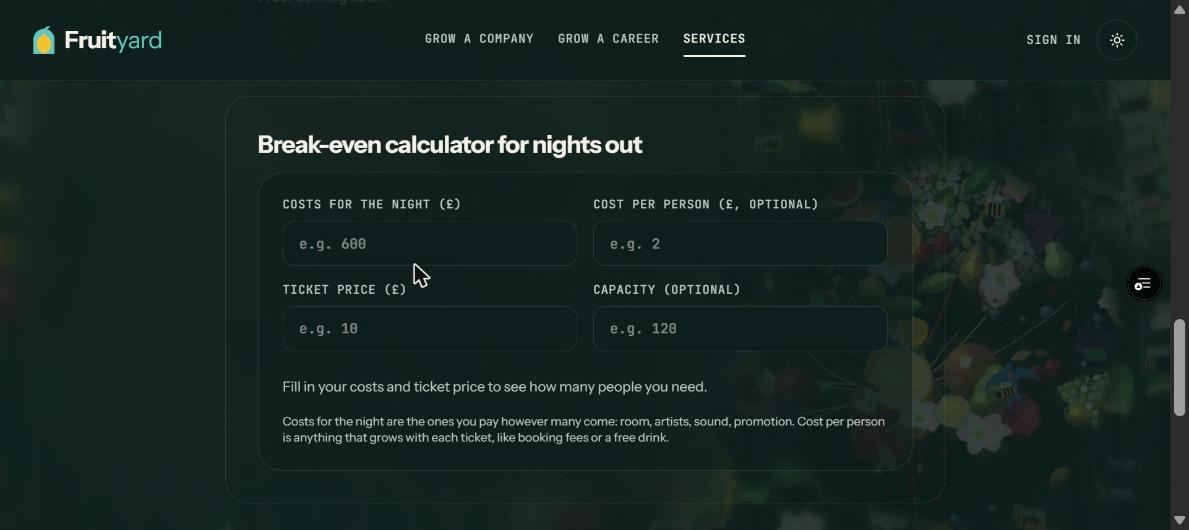
The next version adds a capacity range, artist fees, ticket tiers and a marketing panel. Try the working demo →
A studio that runs on its own stack
- The studio site with forms, double opt-in email and the free tools (Symfony backend, Vercel front end).
- Six sister venture sites on Railway, each with its own domain, mail and icons, all managed through the studio.
- Registered as a company in October 2026, with data-protection registration, a virtual office and separate mailboxes per client project.
Sell the test, not the build
Then → Now
Then: Business discovery and tech discovery as two five-day stages. Now: one stage. AI tools make building quick and cheap, so the risk of building the wrong thing is far smaller, but it's still the real risk.
Then → Now
Then: One price for everyone. Now: a capped founding price, a self-serve tier and free tools, matched to what each customer can pay.